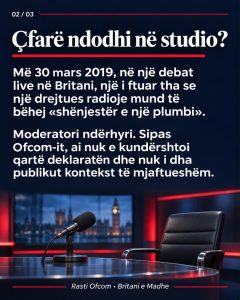


Words carry great responsibility, and so does the failure to respond to them. The following example illustrates how regulators in developed democracies address such situations. On 30 March 2019, during a live television programme in the United Kingdom, the presenter and guests were discussing a radio host who had criticised certain aspects of their faith.
At one point, one of the guests said that someone could make the radio host “the target of a bullet”.
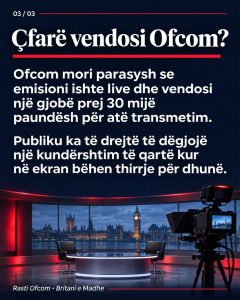
What happened next? The presenter intervened. However, the UK’s media regulator, Ofcom, concluded that the presenter’s interventions did not clearly challenge the guests’ statements or provide viewers with sufficient context.
The British regulator Ofcom (AMA’s homologue), took into account the fact that the programme was broadcast live and fined the broadcaster £30,000 for that broadcast.
During a live programme, a presenter may be hearing a particular statement for the first time, at the same moment as the audience. But after the call for violence was made, what else did viewers hear from the studio? A weak and unclear response.
I am publishing these examples from countries whose democracies we value for their commitment to media freedom because I want us to see together how they approach editorial responsibility and reflect on how we respond to such situations on television.
Sharing these cases also serves to inform the public about the editorial standards and responsibilities that citizens are entitled to expect from television broadcasters, including a clear response to calls for violence during live broadcasts.