


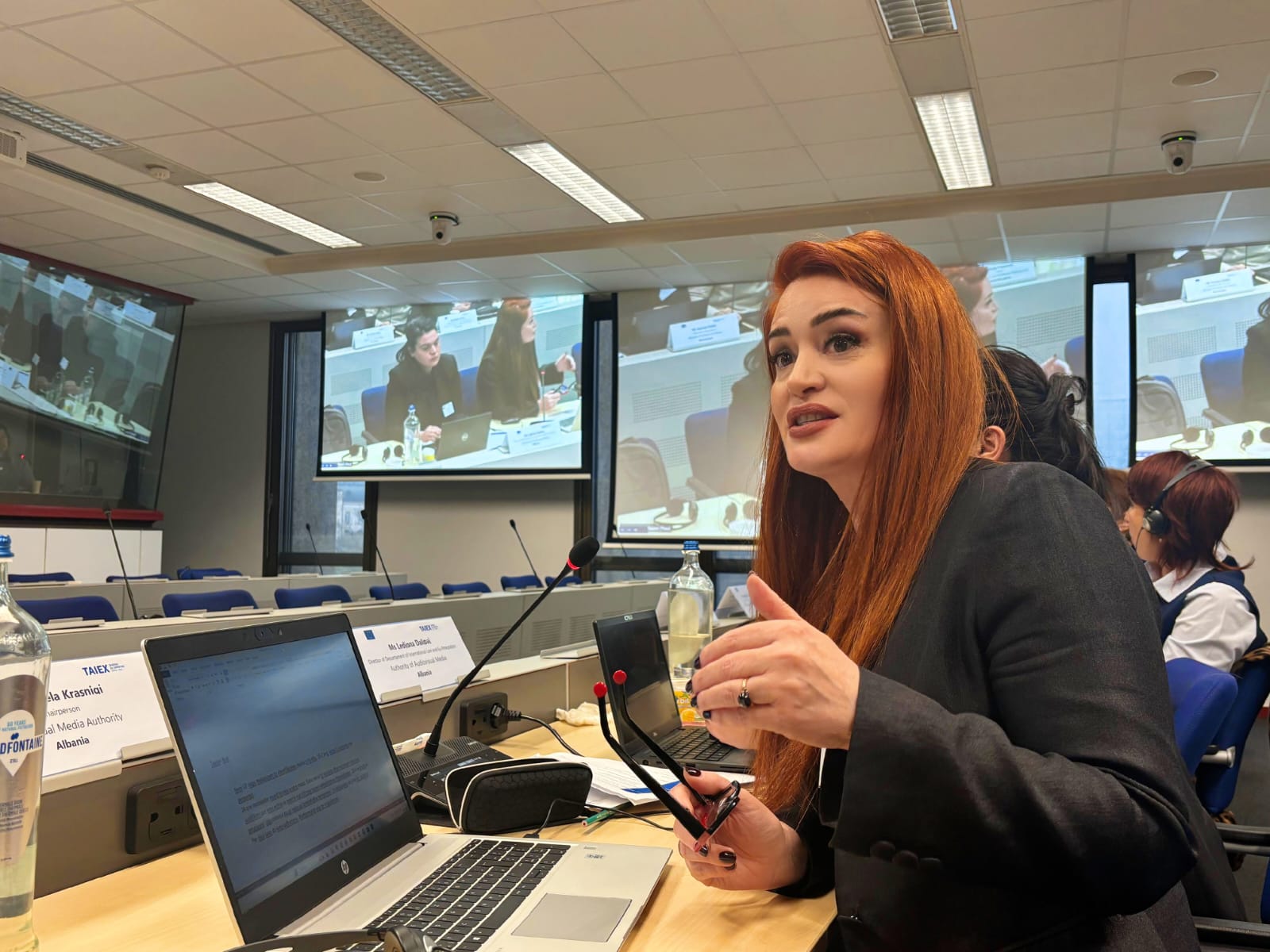
The Audiovisual Media Authority Chairwoman participated in a roundtable discussion between candidate countries and European Union representatives, organized under the TAIEX instrument, regarding the transposition process of the European Media Freedom Act (EMFA) into national legislations.
The meeting, held in Brussels, aimed primarily at supporting beneficiary countries in the transposition and implementation process of Regulation (EU) 2024/1083 – the European Media Freedom Act. The discussions focused on the implementation deadlines for EMFA, the rights and obligations of media service providers, the role of independent regulatory authorities, the functioning of the media market and issues related to media concentration.
Special attention was given to transparency in the allocation of public funds to the media, as well as the challenges arising from the digital environment, including the impact of online platforms, the disinformation risks and the protection of editorial independence.
During the roundtable, it was emphasized that the EMFA represents a cornerstone for ensuring media pluralism, freedom of expression and public access to reliable information. For candidate countries, the transposition of this Act is considered a crucial step toward alignment with European standards and strengthening the media ecosystem in an increasingly digitalized reality.
“We at AMA have full commitment and the necessary professional capacities to transpose EMFA into our legislation and implement this Act. Roundtables like this are important because they serve as platforms for dialogue and coordination, providing concrete guidance on the steps we need to take”, stated AMA’s Chairwoman.
The discussions also addressed media ownership transparency, emphasizing the necessity of identifying beneficial owners and control structures as key mechanisms to prevent hidden political and economic influence over editorial content. In this context, the importance of transparent and objective allocation of state advertising funds was highlighted, ensuring that public financing is not used as a tool for pressure or favoritism, but genuinely serves to support pluralism and the public interest.