

Armela Krasniqi | 19 November 2026
Distinguished representatives of retransmission operators,
Distinguished broadcasting rights holders,
Thank you for being here today.
When a family sits down to watch a match, what they see on screen is the game itself. Those of you in this room know what it takes for that match to reach their screens. Someone has invested in producing the broadcast. Someone has paid for the rights. Someone has built the network and is responsible for delivering the service subscribers receive. When a pirate operator takes that same broadcast and sells it without authorization, it competes for the very same subscriber while avoiding precisely the costs that you have borne.
This is unfair competition and it directly affects you. Every subscription diverted to a pirate service deprives the legitimate market of revenue. This is the revenue used to acquire rights for the following season, finance production and improve the services offered to the public. When piracy undermines the ability to recover these investments, it also undermines the incentive to make them in the future.
Consider the decision you make when purchasing broadcasting rights for an entire season. The financial commitment is made before you know how many subscribers you will have. The same applies to a producer who begins work on a film or an operator who extends its network into a new area. Each takes on a risk and relies on the revenue expected from the market to cover that investment. A pirate service enters this market only after others have assumed the risk, made the investment and brought the product to the public. It then competes for the very revenue needed to sustain that investment.
While subscribers are offered a lower-priced service, the actual cost of that offer is borne by someone else. It falls on the rights holder, whose license loses value; on the operator, which must finance its services with reduced revenue; and ultimately on the public, as the industry has fewer resources available to acquire high-quality content. This is the damage we must bear in mind when determining how quickly we need to respond.
Some of you compete with one another every day for the same customers. However, you share a common interest, ensuring that no unlawful competitor sells those customers content for which you have paid.
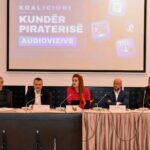
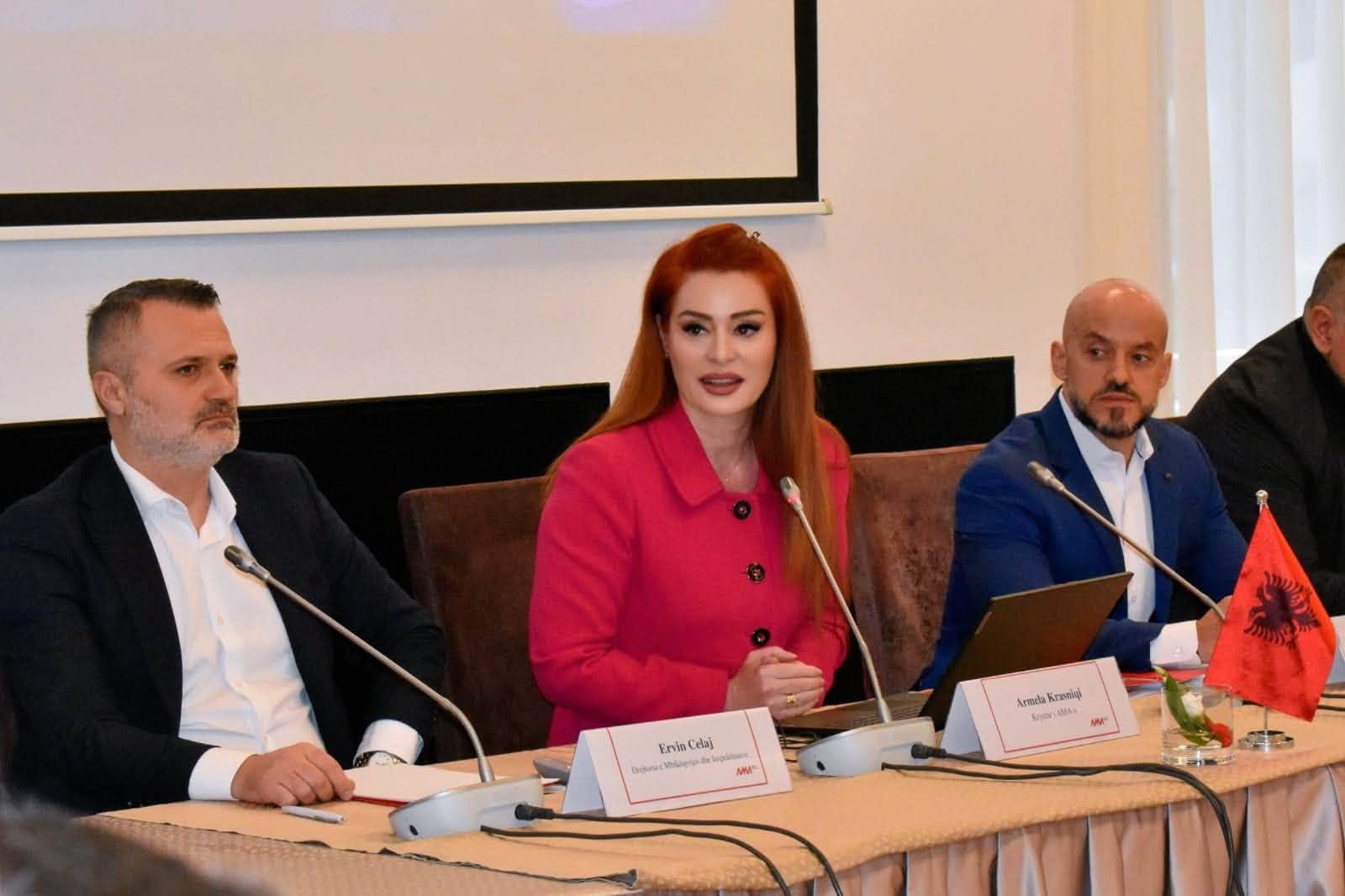
It is on the basis of this shared interest that I invite you to establish the Coalition against Audiovisual Piracy and formalize it through a Memorandum of Understanding. This is an AMA-led coalition bringing together legitimate market operators. This room brings together both those who can document an infringement as soon as it is identified and those who can implement the necessary measures across their own networks.
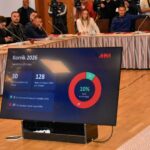
According to the data compiled by AMA’s Inspection and Supervision Directorate for 2026, to date we have carried out 222 on-site inspections and imposed 11 fines, five of which were for violations relating to broadcasting rights. Following reports submitted by our structures, 32 unauthorized servers have been shut down and three applications have been removed. We have also carried out three seizures of equipment used for piracy-related activities.
On-site inspections allow us to see how a service is actually being offered. Reporting to online platforms enables us to intervene wherever pirate services are advertised and attract customers. In a market that now operates simultaneously across our networks and international platforms, our efforts must address both fronts.
According to the same AMA data, between 4 February and 16 November, TikTok removed 2,776 videos and images promoting television piracy following reports submitted by AMA. The platform has demonstrated a willingness to cooperate. On our part, every report is accompanied by complete supporting documentation. We identify the material and establish who holds the rights to the relevant content. This provides the platform with the necessary basis to assess the case and take action.
When one or two international platforms, operating outside AMA’s jurisdiction and beyond the territory of the Republic of Albania, take voluntary action on the basis of our documented reports, I expect the same willingness to cooperate from domestic operators. We have a direct institutional relationship with you through the authorizations granted for retransmission. As internet service providers, you have the teams capable of implementing measures across your networks. As retransmission operators, you are among the first to be affected when a pirate service diverts subscribers away from your legitimate offerings.
Our cooperation with TikTok has also taught us an important lesson about our work. A report that is properly substantiated and clearly explains what has been identified and who holds the relevant rights reduces the time the other party needs to spend seeking clarification. This is why, within this coalition, AMA will require the same standard of documentation, starting with itself. Whenever we refer a case to an operator, the information provided must be clear and sufficiently detailed for it to be forwarded immediately to the technical team.
This year, AMA has referred 399 links, domains and IP addresses to AKEP for blocking. Within the Interinstitutional Task Force framework, AMA and AKEP have conducted joint inspections. According to the confirmations submitted by AKEP, the entities inspected had declared that they had implemented the blocking measures. However, AMA’s inspection report shows that a considerable number of them had still failed to implement the required measures.
This discrepancy is unacceptable.
Whenever a confirmation contradicts what we find on the ground, we must go back to the specific case.
Which link was checked? At what time was the measure implemented? Did any other link remain accessible? These questions can only be answered if each operator documents its actions at the time they are carried out. Therefore, reporting on each individual link will form an integral part of how we monitor implementation.
On 1 July this year, I reported to Parliament, before the National Council for European Integration, on the fight against piracy and the work that lies ahead of us in the context of Albania’s negotiations with the European Union. Following the Council’s recommendation, on 13 July AMA convened the relevant institutions to discuss the establishment and operation of the Task Force against Digital and Audiovisual Piracy. The need for greater cooperation and oversight has also been raised by the Committee on Citizen Initiatives, Cooperation and Institutional Oversight. The protection of broadcasts is grounded in international law. The 1961 Rome Convention, which entered into force for Albania in September 2000, recognizes, under Article 13, the right of broadcasting organizations to authorize or prohibit the rebroadcasting of their broadcasts. With regard to live events, the European Commission has also provided practical guidance. In its Recommendation (EU) 2023/1018 of 4 May 2023 on combating online piracy of sports and other live events, the Commission encourages cooperation between rights holders and intermediaries, as well as the swift handling of notices concerning unauthorized retransmissions. For us, this means organizing our work in such a way that we can intervene while the event is still being broadcast.
Cooperation begins with the rights holder. As soon as you identify an unauthorized broadcast, you should submit the exact link to AMA, identify the content and the time at which the infringement was detected, and provide the documentation proving your rights. If the event is being broadcast live, this must be clearly indicated in your initial report. A complete complaint enables us to verify the case and take action while the broadcast is still ongoing.
AMA verifies the complaint and, where the necessary conditions are met, formally refers the case to AKEP. AKEP then notifies the operators in accordance with the applicable procedure. Through the PENPA platform, developed by AMA, participating operators can follow the cases referred to them, communicate directly with the institution and, following official notification from AKEP, report the actions they have taken across their networks.
For every link, domain or IP address referred, we require a complete response. Once the measure has been implemented, the operator must record the date and time. If a technical obstacle arises or further clarification is required, the operator must report this immediately and explain the reason. Where a notification contains several links, we need to know what action has been taken in respect of each one. This information enables AMA to verify implementation and follow up immediately on any outstanding cases.
Let me give an example. During the first half of a football match, a rights holder identifies that the signal is being retransmitted without authorization through several links. The rights holder submits the relevant information together with proof of the rights ownership. AMA reviews the case and formally refers it. Following notification from AKEP, the designated contact person immediately forwards the case to the technical team. Once the measure has been implemented, the operator records the time and the outcome for each link. If two links have been blocked while further clarification is required for a third, AMA is immediately informed of precisely which link requires further follow-up. This is particularly important during those crucial minutes when the broadcast is still ongoing.
On our part, I want this working arrangement to help us identify where time is being lost. There may be cases where supporting documentation is submitted late, cases where technical details need clarification, and cases where delays occur after official notification. When every step is properly documented, we can intervene wherever an obstacle has arisen and assess whether our performance is improving from one case to the next.
Participation in the Memorandum is voluntary. By signing it, rights holders undertake to submit reports promptly and provide complete supporting documentation. I expect operators to designate a contact person who can mobilize the technical team, implement the required measures in accordance with AKEP’s notification, and accurately report the outcome. AMA undertakes to verify complaints, formally refer cases and follow them through to the verification of implementation.
Those of you in this room have an opportunity to defend a shared interest, even when you are competitors in the market. A rights holder who submits a timely report enables an operator to take action. An operator who implements the measure swiftly helps protect the value of rights in which someone else has invested. And an institution that verifies the outcome provides both parties with a basis for confidence in their cooperation. This is the commitment I am asking us to make today.
I invite you to sign the Memorandum of Understanding and become part of this Coalition.
When we meet again, we will review how quickly we have intervened and in how many cases we have verified the blocking measures. Every timely intervention helps protect the rights in which someone in this room has invested and provides greater confidence to those considering making further investments.
Thank you.